
Chronology
The Story of Galileo's Instruments
after 1642
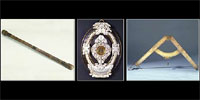

The few objects and mementoes of Galileo that have come down to us after four centuries are considered extraordinary symbols of science imbued with the very highest evocative and cultural significance.
At first some instruments that had been donated by Galileo to the Medicean dynasty, such as the objective lens of the telescope with which he had made numerous observations in 1609 and 1610, were kept in the Guardaroba of the Prince, later Cardinal, Leopold de' Medici. At the death of the latter, these objects entered the Medicean collection, kept in the Uffizi Gallery, where they remained until 1793 when, under the rule of the Lorraines, they were moved to the Florence Museum of Physics and Natural History.
In 1841, inside the Museum, a monumental edifice was built - the Tribune of Galileo - destined to display Galileo's instruments surrounded by abundant iconographic material: numerous frescoes and bas-reliefs portray the instruments, the scientific discoveries and the scientists who made them.
In 1927 Galileo's instruments were moved to the Museum of the History of Science, founded at the initiative of the University of Florence. Still today, the Museum dedicates ample exhibition space to Galileo, displaying his precious original instruments along with mementos and models made in the 18th and 19th centuries to illustrate his fundamental research in mechanics.